Metallic Growth
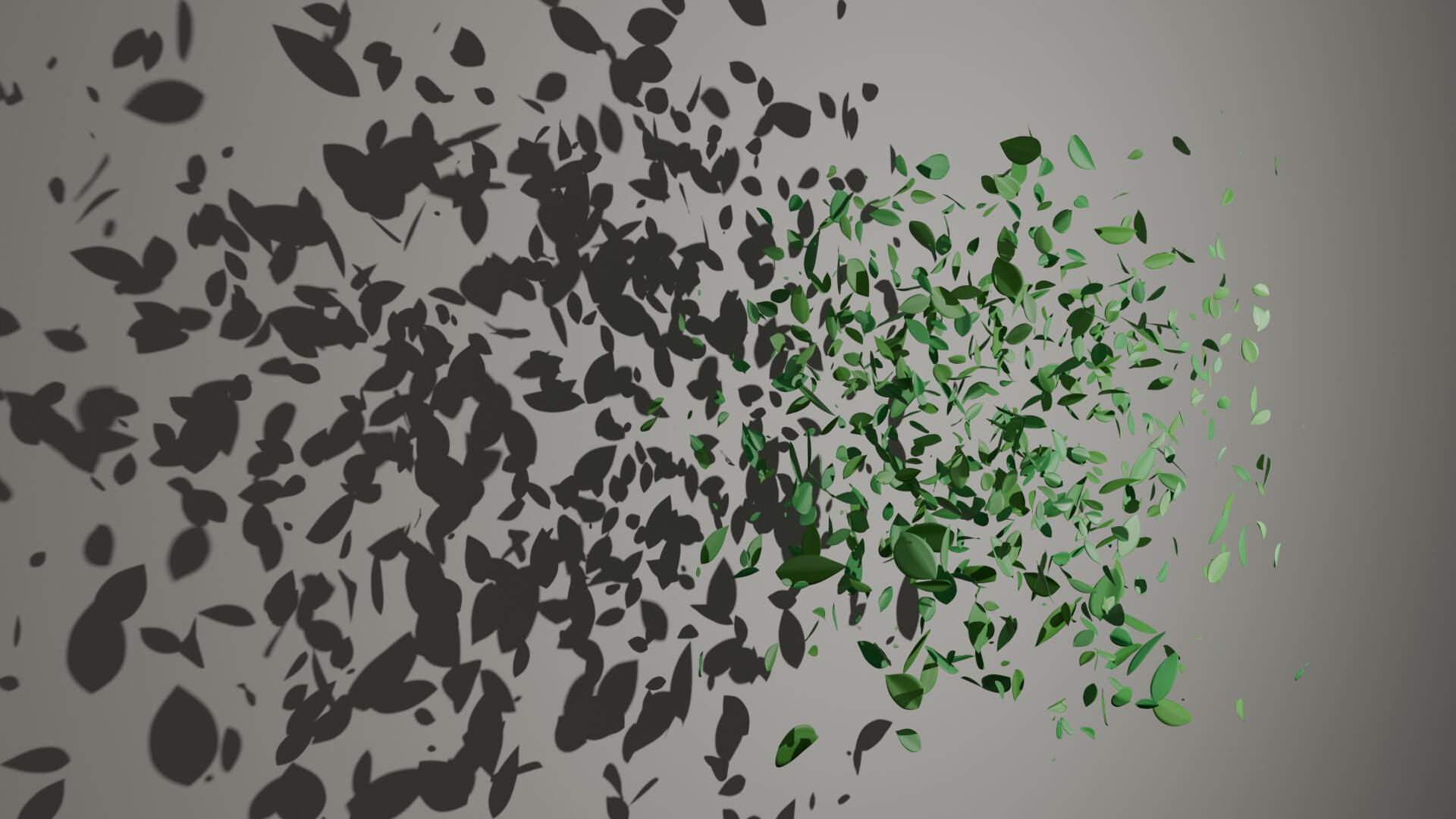
Reflective metallic surfaces give the system a more architectural, constructed character. This visual direction is particularly suited to technology, luxury, automotive, finance, architecture, and premium products.
Olga Pudrovska
Original visual systems for brands, products, and spaces.
3D animation, interactive experiences, creative software, and sculpture.
View the WorkWatch Full Animation ↗Images formed in space. Revealed through shadow.
Anamorphic Shadow Systems use a cloud of individually positioned three-dimensional objects to construct a precise image through projected shadow.
The same arrangement exists as both an abstract sculptural composition and a recognizable logo, symbol, or image revealed by light.
Instead of drawing the image on a surface, I arrange three-dimensional objects so that their shadows form the desired image under carefully positioned lighting.
Beyond leaves.
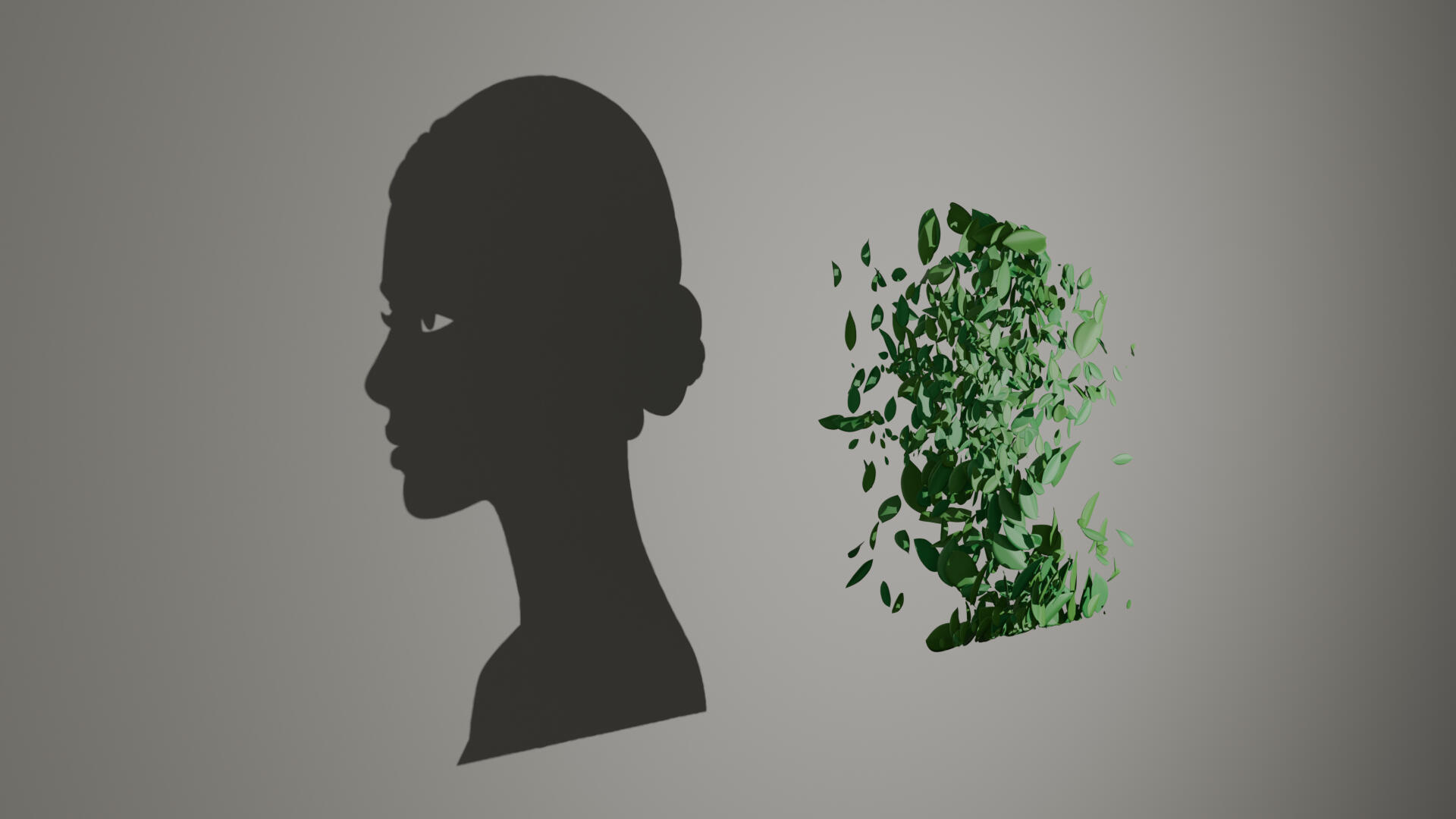
The underlying computational approach is not limited to leaves. It can be adapted to different object families, including geometric forms, ice-like shards, crystalline or glass fragments, chess pieces, and custom product-related components.
Hundreds of individual forms. One collective image.
Growth System is a leaf-based implementation of my Anamorphic Shadow Systems.
Hundreds of leaves are positioned and oriented using a custom computational algorithm to produce a precise target shadow. Selected elements can be manually placed or refined where needed to improve important details.
Reflective metallic surfaces give the system a more architectural, constructed character. This visual direction is particularly suited to technology, luxury, automotive, finance, architecture, and premium products.
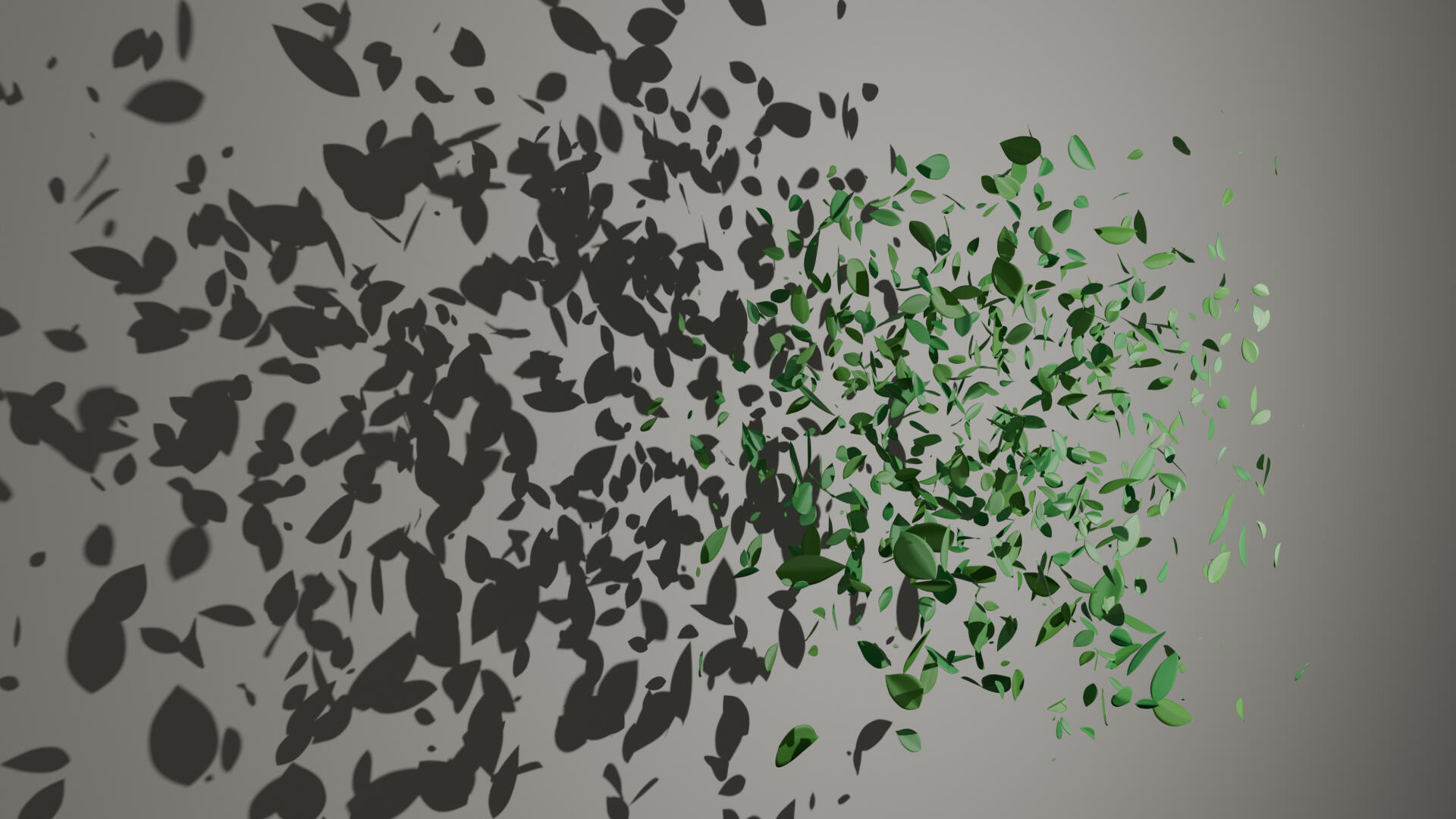
Organic leaf forms and deep green materials emphasize the relationship between nature and computational structure. This botanical direction can suit sustainability, climate technology, wellness, biotechnology, life sciences, and environmental brands.
Custom animated sequences, seamless loops, campaign visuals, website heroes, launch presentations, high-resolution stills, and large-format displays.
Selected digital structures can be developed toward physical shadow sculptures using 3D printing, fabrication, and controlled lighting.
Real-time 3D implementations with individually interactive elements, precomputed complex motion, pointer responses, scroll-based transformations, and explanatory callouts.
Digital or physical experiences developed for exhibitions, showrooms, offices, events, hospitality spaces, and architectural interiors.
Beyond animation. Into interaction.
My computational visual systems can become real-time interactive experiences for websites, digital installations, and interactive displays in lobbies, exhibitions, and events.
Unlike pre-rendered videos, these experiences allow visitors to interact directly with the underlying 3D scene, exploring objects, triggering animations, and revealing information. My nearly two decades of software development experience, including work on mobile and Smart TV applications for leading US media companies, allow me to develop complete interactive applications, not just their visual content.
Precomputed assembly and dispersal animations with independently interactive objects, pointer responses, highlighting, and informational callouts.
Interactive ripple surfaces that respond to pointer movement and disturbances, then gradually reconstruct the original image.
Explorable geometric structures with interactive rotation, layer visibility, highlighting, and custom spatial interactions.
Brand marks built from ripples.
Fluid System creates images from overlapping circular waves across a water-like surface.
By controlling the position, size, and timing of individual ripples, the system constructs logos, monograms, names, and graphic symbols through the waves themselves.
The image is not simply overlaid on the surface. It emerges from the behavior and arrangement of the animated circular forms.
The system can produce seamless looping animations, website heroes, campaign visuals, high-resolution stills, and digital display content.
Interactive implementations can extend the concept with responsive disturbances, reconstruction, and custom user interactions.
Geometry, structure, and light.
Lattice System constructs open three-dimensional structures from repeated geometric elements.
Layered geometry creates intricate patterns of light, shadow, and negative space, turning the surrounding environment into part of the visual composition.
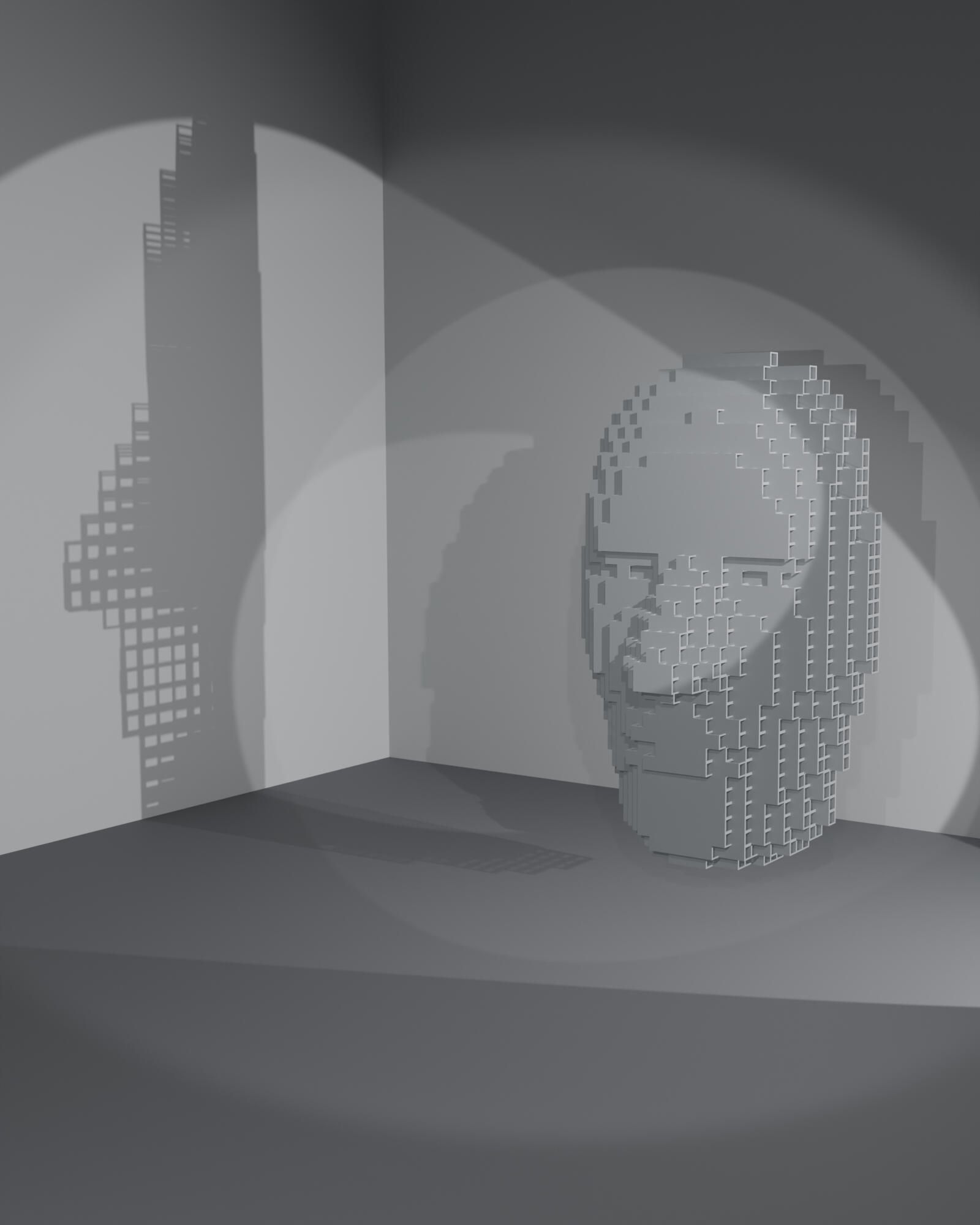
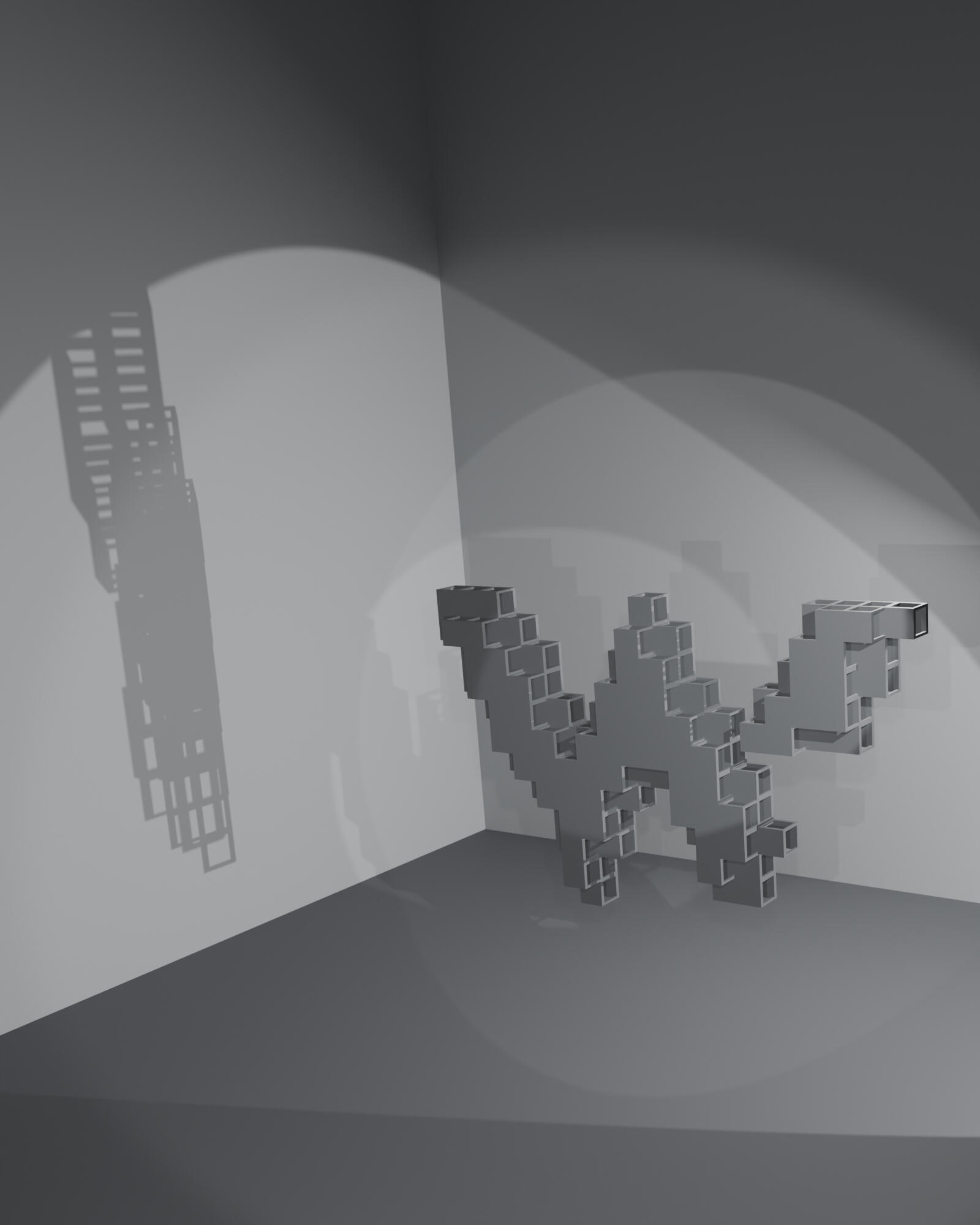
The system explores how solid forms can be reinterpreted as modular spatial structures with a distinct architectural language.
Potential applications include 3D animation, sculptural visualization, interactive spatial experiences, modular physical objects, and large-scale installations.
The examples shown represent an early prototype. The system can be further refined and extended to meet the visual and technical requirements of individual commissions.
Modular construction also extends into my physical sculptural work. Using LEGO bricks as geometric building blocks, I create three-dimensional forms and portraits from repeated elements.
These sculptures explore the relationship between digital geometry, physical structure, and recognizable form. The approach can be adapted for custom portraits, sculptural objects, and commissioned display pieces.
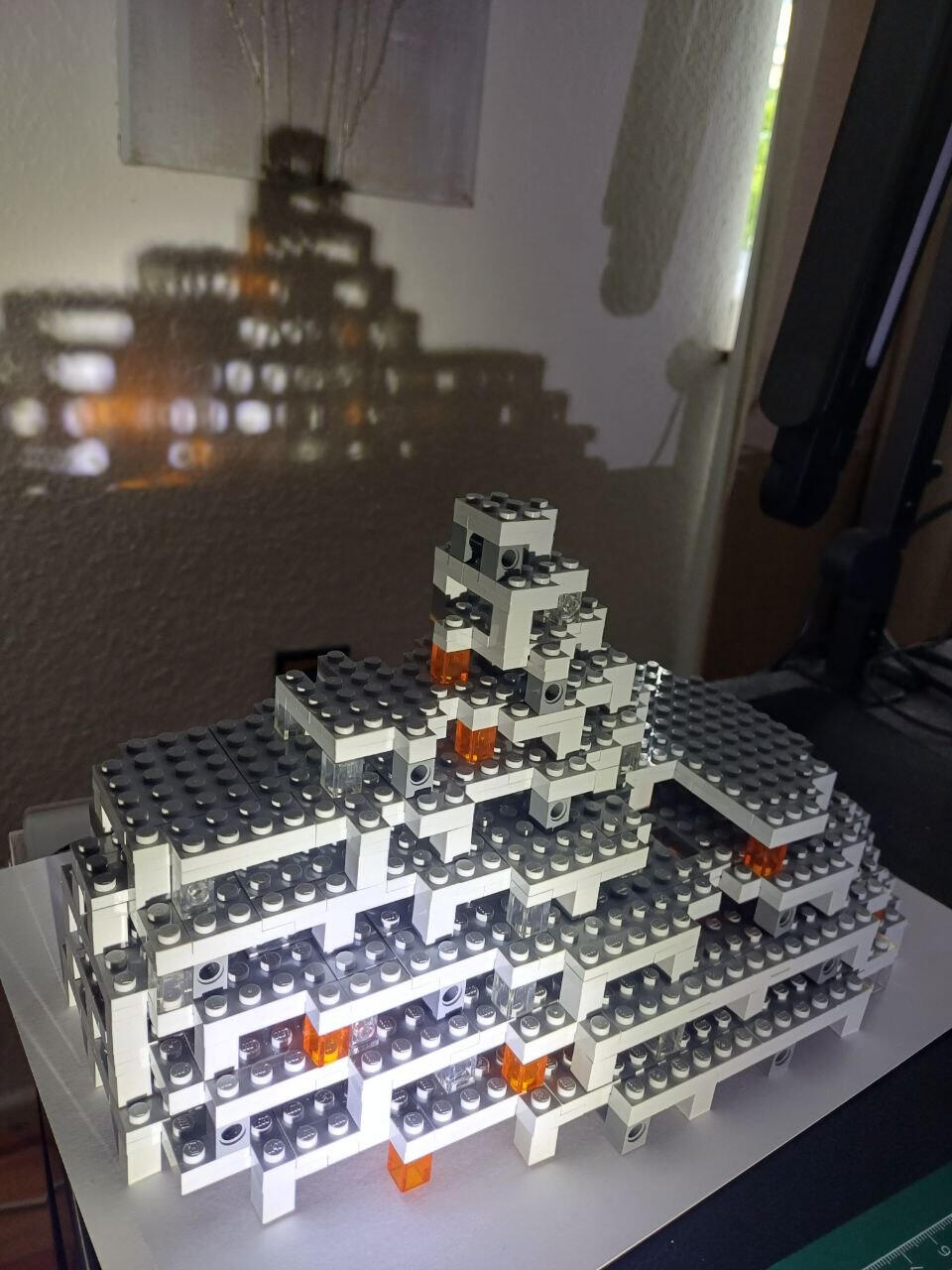
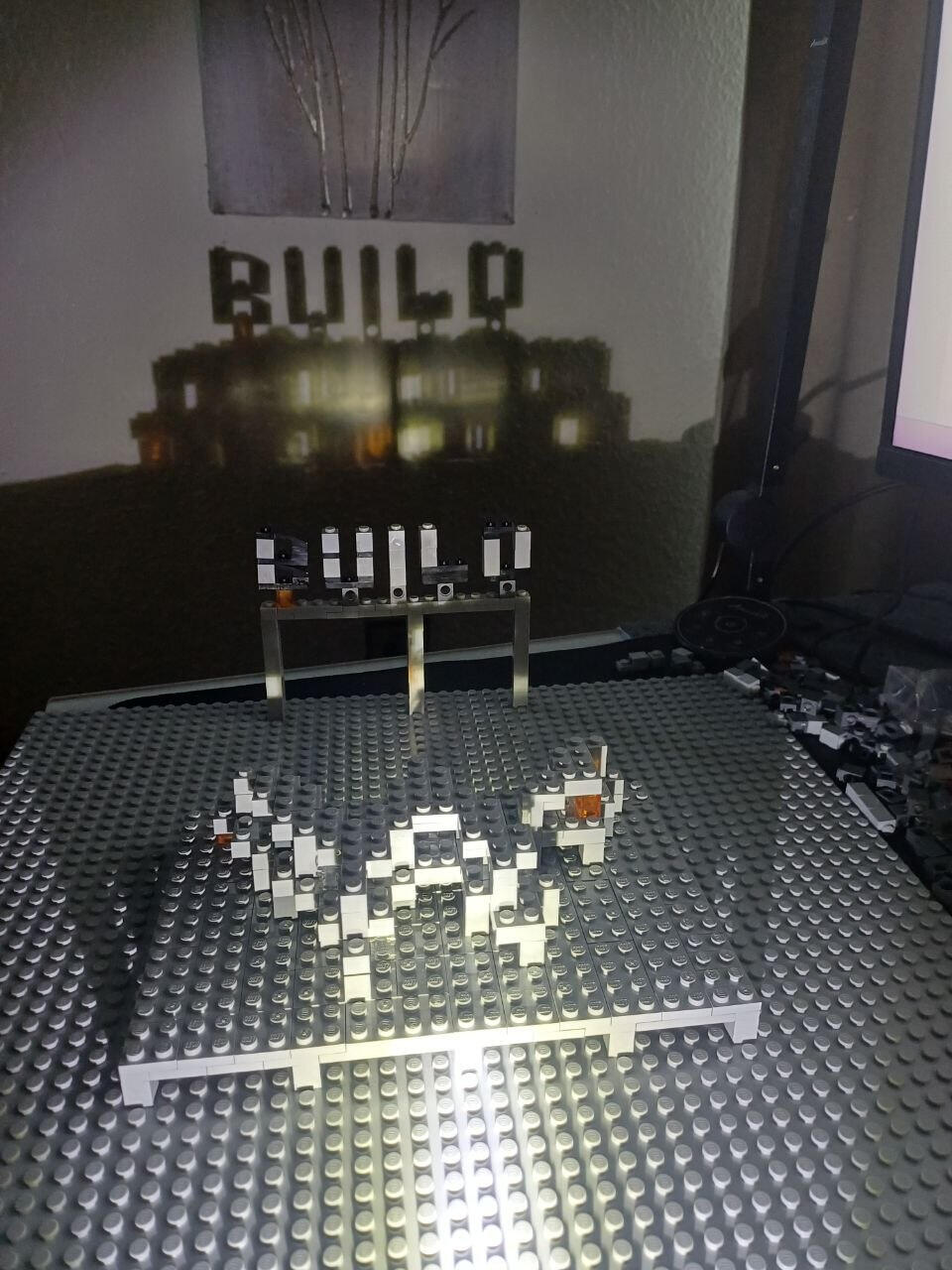
Under directed lighting, the sculptures also cast distinctive shadows onto surrounding walls. These projected forms can reveal architectural silhouettes, geometric patterns, and even lettering, creating a second visual composition alongside the physical sculpture.
Individual elements can carry meaning.
A computational visual system does not have to be purely decorative. Its elements can represent ideas, components, processes, or relationships while collectively forming a larger image.
For a software product, individual forms might represent AI agents, tools, data, or stages of a workflow.
For a scientific or technological concept, they might reflect physical components, structural relationships, or processes.
In an interactive experience, these elements can also reveal information, respond to selection, or illustrate connections.
The result can combine visual identity with a way of explaining how a product, technology, or system works.
From one-off visuals to reusable creative tools.
Beyond finished animations and interactive experiences, I develop custom computational systems and software for creative production.
These systems are deterministic and configurable: the same inputs and settings produce the same results. This allows visual outputs to be reproduced, refined, and adapted with precision and consistency.
For agencies, brands, and product teams, this makes it possible to create families of related assets across campaigns, products, formats, and markets, while automating repetitive production work.
AI-assisted tools can also be integrated into selected stages of production, while deterministic computational processes maintain precise control over geometry, motion, and final outputs.
Custom software for generating consistent, reproducible compositions, controlled visual variations, motion sequences, and branded content from defined inputs.
Tools and pipelines for producing controlled variations across formats, campaigns, products, and markets.
Custom applications that combine procedural geometry, visual logic, structured input, and configurable output.
Custom browser-based experiences connecting real-time graphics with product information, data, and user interaction.
Original computational approaches developed for visual or technical challenges that cannot be addressed effectively with existing tools.
For recurring applications, a commissioned visual system can evolve into reusable creative software.
The visual language can be adapted to the project.
Logos, symbols, typography, portraits, simple graphic forms, and custom imagery.
Botanical elements, geometric components, crystalline structures, glass-like fragments, product-related objects, and custom meshes.
Metallic, botanical, translucent, matte, reflective, crystalline, or brand-specific finishes.
Assembly, dispersal, growth, rotation, transformation, reconstruction, and responsive behavior.
The setting within the artwork, including backgrounds, surrounding 3D spaces, architectural elements, and virtual stages, can be designed to reflect the brand's identity.
Pointer movement, scrolling, highlighting, callouts, selection, navigation, and project-specific behavior.
For projects that require a different visual language or underlying process, an original computational system can be developed from scratch.
Projects range from individual motion pieces to complete custom visual systems and creative software.
The following are starting prices. Final scope and pricing depend on the concept, complexity, deliverables, licensing, and technical requirements.
From €6,000
Custom 3D visuals based on an existing system, adapted to your brand, image, material direction, and intended use.
A typical commission can include:
Additional formats, compositions, variations, edits, and deliverables can be commissioned separately.
From €12,000
A custom 3D visual experience combining rendered motion with a real-time interactive browser implementation.
Complex assembly, dispersal, and transformation sequences can be precomputed, while individual objects remain part of a live 3D scene rather than a pre-rendered video.
Depending on the project, interactive features can include:
The result can serve as an interactive website hero, product presentation, or visual storytelling experience.
Specific interactions, performance requirements, website integration, and additional development are defined according to the project scope.
From €20,000
Original computational visual systems, reusable creative tools, custom generators, and production workflows.
Projects may involve procedural system development, geometry, motion, interaction, configurable outputs, automation, and custom software interfaces.
Applications can include reusable branded visual engines, automated campaign production, internal creative tools, and systems that generate new visual outputs from structured inputs.
Integration, source-code delivery, licensing, ownership, and ongoing development are defined according to the project.
From €50,000
A complete creative-technology project combining original system development, visual direction, animation, interactive experiences, and coordinated campaign assets.
Depending on the brief, a project can include:
Exclusivity, source-code delivery, intellectual property transfer, and ongoing development are scoped separately.
We establish the intended use, audience, source materials, brand direction, technical requirements, deliverables, and project constraints.
I develop the visual approach, including object language, composition, materials, lighting, motion, and interaction.
An existing computational system is adapted, or new procedural logic, geometry, software, and workflows are developed.
The initial computational results are refined through art direction, with attention to composition, spacing, materials, lighting, movement, and presentation.
The agreed outputs are prepared and delivered, whether animation, interactive web implementation, campaign assets, custom software, or physical development.
Project milestones, review rounds, usage rights, and deliverables are agreed in advance.
I am a computational artist, designer, and software engineer working across procedural systems, 3D animation, interactive experiences, creative software, and sculpture.
My background spans nearly two decades of software development, with experience building complex applications, tools, and technical systems.
I bring that engineering experience into visual work, developing custom computational approaches for ideas that would be difficult or impractical to construct manually.
My practice combines artistic direction with technical implementation, allowing projects to move between digital imagery, real-time interaction, software, and physical form.
Originally from Kharkiv, Ukraine, I am currently based in Germany and work remotely with international clients.
Have a visual concept, interactive experience, or technical challenge in mind?
I work with agencies, brands, and product teams to develop distinctive visual systems and the software behind them.
Tell Me About Your Project →